A short history of distilling
Distilling began as a laboratory art, became medicine, then a drink, and almost at once a target for tax collectors. Most of today's law on home distilling is a leftover of that last step.
As an Amazon Associate I earn from qualifying purchases. About our links
The alembic and the alchemists
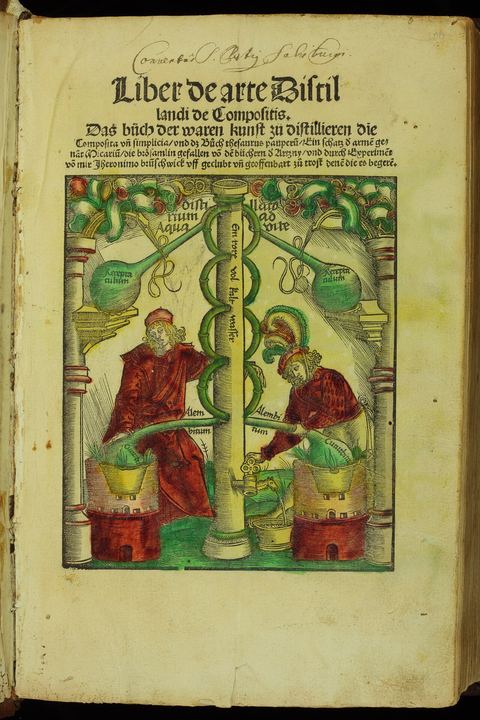
The oldest name for a still tells its route into Europe. Alembic came into English through Medieval Latin alembicum from the Arabic al-anbīq, which in turn came from the Greek ambix, a vessel.[2] The word's journey, from Greek through Arabic into Latin, hints at how the technique itself traveled.
To the alchemists, the strong spirit they could draw from wine looked like something new: a "quintessence," a fifth element beside earth, water, air and fire.[3]
Medieval aqua vitae: the water of life
By around 1100, the medical school at Salerno in southern Italy was producing distilled alcohol in useful amounts, and it was valued as a medicine. About two centuries later the scholar Arnaud of Villanova called it aqua vitae, "water of life."[3] The name stuck in several languages: eau de vie, aquavit, and whisky, from the Gaelic for the same phrase.[3]
The first written record of distilling in Scotland is a tax record. An entry in the Exchequer Rolls for 1494 records eight bolls of malt given to Friar John Cor to make aqua vitae for the king.[4,5]
Scotland and Ireland: taxes, smugglers and licences
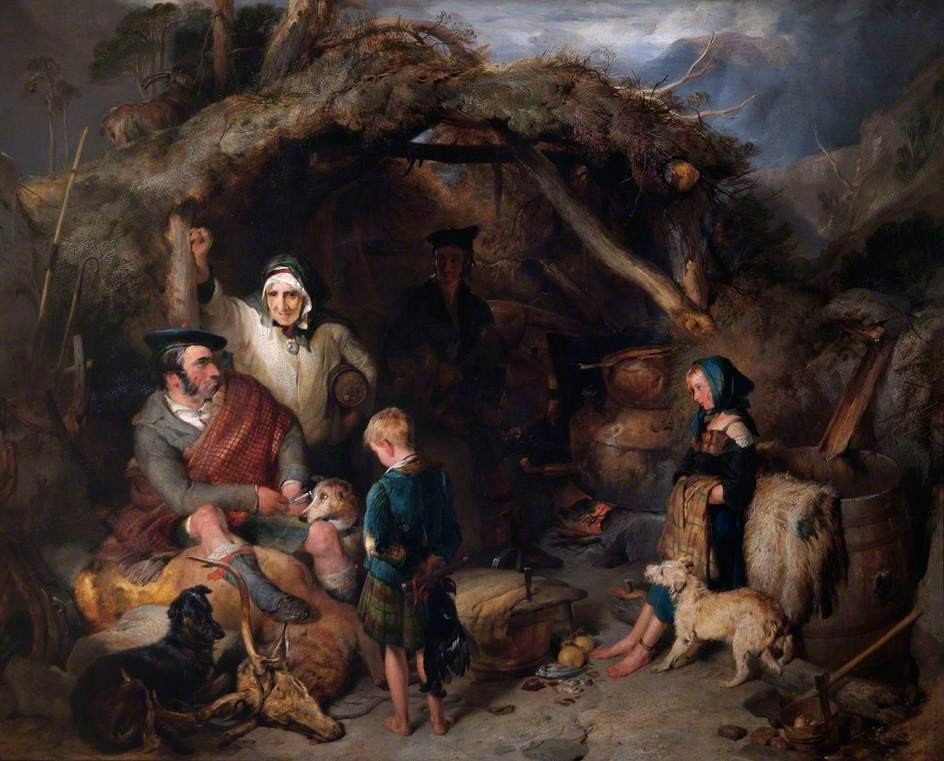
Once spirits were a trade, governments taxed them. Scotland introduced its first taxes on whisky in 1644, and for roughly the next 150 years smuggling was common. By the 1820s up to 14,000 illicit stills were being seized each year, and more than half the whisky drunk in Scotland paid no tax.[5]
In Ireland, the Irish House of Commons asked in 1661 for an excise on alcohol production, and it received royal assent in December 1662. Taxes pushed small distillers into remote hills, where their poitín became "mountain dew," and a 1785 law made all unlicensed private distilling illegal.[7]
Scotland's answer was to make the legal path cheaper. The Excise Act of 1823 allowed distilling in return for a £10 licence fee and a set duty per gallon, and within about a decade smuggling had largely disappeared.[5]
America's first federal tax, and the Whiskey Rebellion
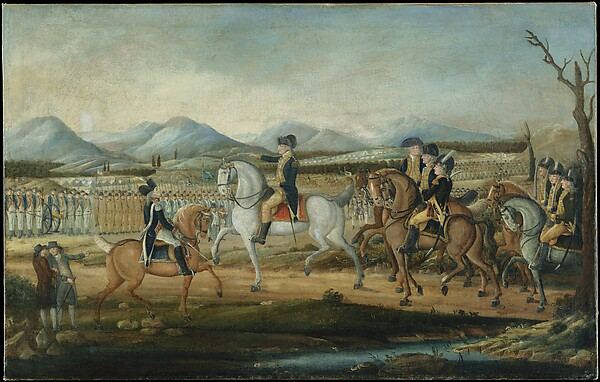
- 1791To pay the Revolutionary War debts the federal government had taken over from the states, Treasury Secretary Alexander Hamilton pushed through a federal excise on spirits and the stills that made them.[9] The Act of March 3, 1791 also let tax officers enter registered distilleries and set the hours when spirits could be moved.[10]
- 1794Frontier farmers, who turned surplus grain into whiskey because it was easier to carry over the mountains, saw the tax as unfair. In western Pennsylvania, collectors were threatened and tarred and feathered, and in July 1794 armed rebels burned the home of the local tax collector, John Neville. President Washington called up close to 13,000 militia from four states and personally led part of the force.[9]
- 1802President Jefferson's Congress passed "An Act to repeal the Internal Taxes," ending the whiskey excise from June 30, 1802.[11] Over the following decades the spirits tax was raised, lowered, briefly repealed and brought back.[10]
Read more: William Hogeland's The Whiskey Rebellion (2006) tells the story of Washington, Hamilton and the frontier rebels who defied the tax.[12]
The Civil War tax and the 1868 dwelling-house ban
The Civil War changed everything. On July 1, 1862 Congress created the Office of the Commissioner of Internal Revenue and a permanent system of internal taxes to pay for the war.[13] Treasury collected taxes on alcohol and tobacco to help finance it.[14] Evasion grew with the tax.
In 1866 Congress added a rule against using a still in certain places, including "in any dwelling-house." The Treasury Secretary's report that year described great numbers of small stills hidden "in the garrets and cellars of the most populous cities."[10] A House select committee concluded in 1867 that "the most stupendous frauds" were being practiced against the spirits revenue, and estimated that at least seven-eighths of all spirits made had escaped the tax.[10,15]
Congress answered with the sweeping Act of July 20, 1868, 109 sections long. Section 12 banned stills in dwelling houses and in sheds, yards or enclosures connected to them, as well as on boats and on premises where beer or other fermented drinks were made.[15,16] That section, recodified, is the ban still on the books today as 26 U.S.C. § 5178(a)(1)(B), with its penalty in § 5601(a)(6).[17,18] Its purpose, as courts have described it ever since, was to "secure the revenue."[15]
Moonshiners and revenuers
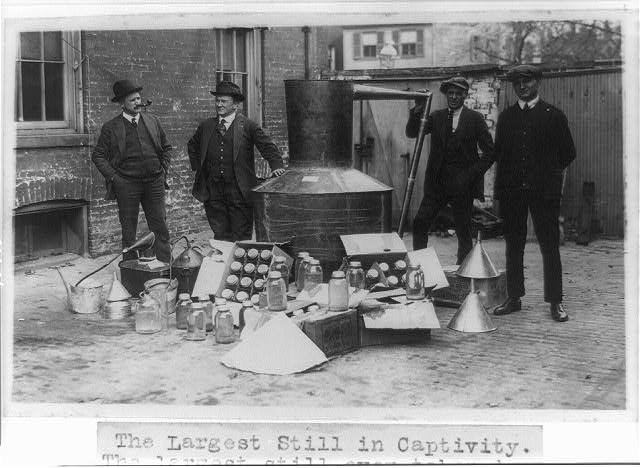
The new law did not end untaxed whiskey, especially in the rural South. Moonshine got its name from being made at night, when smoke from a still was less likely to be seen, and it was sold out of reach of alcohol taxes.[20] The federal tax agents who hunted the stills, the "revenuers" of song and legend, worked for the Treasury Department, which has collected the spirits tax since 1791. Its alcohol tax bureau today is the TTB, created in January 2003.[14]
Read more: Jaime Joyce's Moonshine: A Cultural History of America's Infamous Liquor (2014) goes well beyond the Southern stereotype, from colonial times to the present,[21] and Kevin R. Kosar's short Moonshine: A Global History (2017) covers its politics, pop culture, dangers and today's legal moonshine.[22]
Prohibition
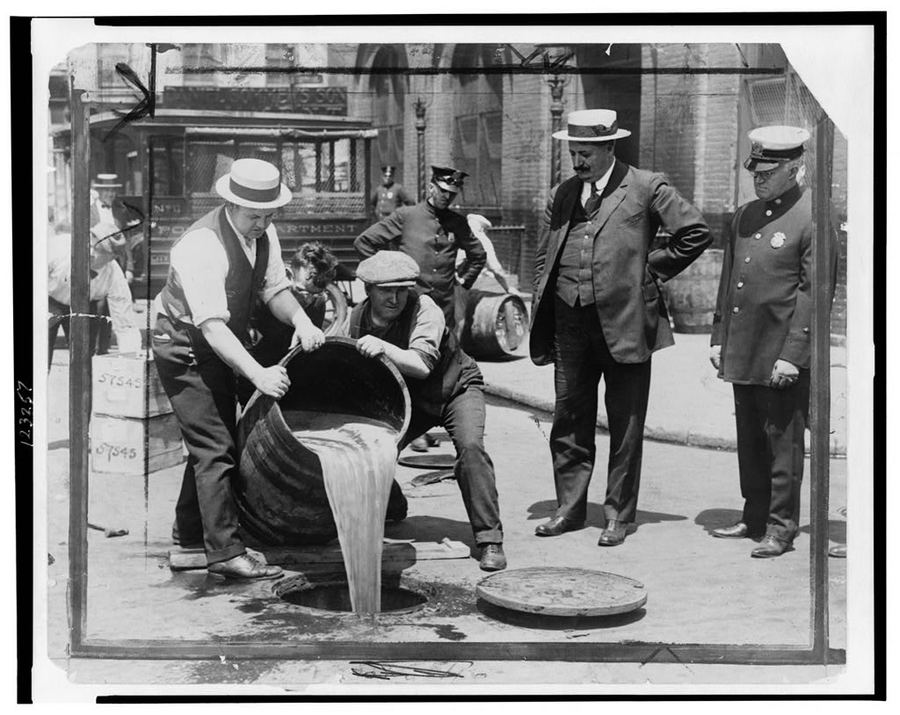
The Eighteenth Amendment, ratified in January 1919, banned the manufacture, sale and transportation of intoxicating liquors, starting one year after ratification. Later in 1919 the National Prohibition Act, better known as the Volstead Act, set out how it would be enforced.[24] Illicit production soared, and the moonshine trade needed drivers who could outrun the law.[20] The Twenty-First Amendment, ratified in December 1933, repealed Prohibition. Its second section lets each state bar liquor brought in against its own laws, which is why alcohol rules still differ so much from state to state.[25,26]
Repeal brought back legal liquor, but not legal home distilling. The 1868 location ban and the federal spirits tax system remained.[16]
Read more: Daniel Okrent's Last Call: The Rise and Fall of Prohibition (2010) is the standard popular history.[27] Lisa McGirr's The War on Alcohol (2015) shows how enforcing Prohibition helped build federal police power.[28] Deborah Blum's The Poisoner's Handbook (2010) follows New York's medical examiner and toxicologist as they fought deadly wood alcohol in bootleg liquor.[29]
1978: beer and wine at home, but not spirits
For decades the law let the registered head of a family make up to 200 gallons of wine a year for the family, but made no such allowance for beer.[30] On October 14, 1978, President Carter signed Public Law 95-458. It let any adult make beer, and wine, at home for personal or family use and not for sale, up to 100 gallons a year, or 200 gallons for a household with two or more adults. The change took effect on February 1, 1979.[31,32,30]
Spirits were left out. That gap is why home brewing is a mainstream hobby while home distilling of spirits is a felony.[33] What the home-brew rules allow today: making beer and wine at home.
From moonshine runs to NASCAR
Moonshine runners drove ordinary-looking cars with heavy-duty springs, the back seats pulled out for cargo, and engines built to outrun police and tax agents. Many raced each other when they were not hauling. On December 14, 1947, Bill France met with drivers, car owners and mechanics to set common rules for those stock-car races, and NASCAR was born; its first official race followed two months later.[20]
The most famous runner-turned-racer was Junior Johnson of North Carolina. He was never caught on the road, but federal agents arrested him at his father's still in 1956. He won 50 NASCAR races, and on December 26, 1986, President Reagan pardoned him for the moonshining conviction.[34]
Read more: Neal Thompson's Driving with the Devil: Southern Moonshine, Detroit Wheels, and the Birth of NASCAR (2006) tells the whole story.[35]
Today
The 1868 ban survived Prohibition, repeal and the 1978 home-brew law, and it stood for more than 150 years. In December 2023 and early 2024 hobbyists took it to court, and in 2026 the Supreme Court agreed to hear the case.[10,36] See where the law is heading.
Further reading
Our best books on distilling history and the law lists more than a dozen titles with a note on each. Shopping for someone? See gifts for whiskey and history lovers.
Sources
- Hieronymus Brunschwig, Liber de arte distillandi de compositis (Strasbourg, 1512), title page Science History Institute, via Wikimedia Commons (public domain)
- Alembic (etymology) Merriam-Webster
- On Food and Cooking, "Spirits and Waters of Life" Harold McGee (Scribner, 2004), via ckbk
- First recorded reference to whisky, 1494 (Exchequer Roll, E38/306) ScotlandsPeople / National Records of Scotland
- The story of Scotch Scotch Whisky Association
- Edwin Landseer, The Illicit Highland Whisky Still (1829) Wikipedia file page (public domain in the United States)
- Poitín: monks, King Henry VIII, the Revenue Commissioners and mountain dew RTÉ Brainstorm (Judith Boyle, TU Dublin), June 20, 2023
- Washington Reviewing the Western Army at Fort Cumberland, Maryland (attributed to Frederick Kemmelmeyer, after 1795) The Metropolitan Museum of Art (public domain)
- George Washington and the Whiskey Rebellion George Washington's Mount Vernon
- Petition for a writ of certiorari, DOJ v. McNutt (appendix includes the Fifth Circuit and district court opinions) Office of the Solicitor General, August 14, 2026
- An Act to repeal the Internal Taxes, ch. 19, 2 Stat. 148 United States Statutes at Large (via Wikisource), April 6, 1802
- The Whiskey Rebellion, by William Hogeland (review) Kirkus Reviews
- IRS History Timeline Internal Revenue Service, March 2019
- Our History Alcohol and Tobacco Tax and Trade Bureau (TTB)
- Ream v. U.S. Department of the Treasury, No. 25-3259 (opinion) U.S. Court of Appeals for the Sixth Circuit, April 21, 2026
- McNutt v. U.S. Department of Justice, No. 24-10760 (opinion) U.S. Court of Appeals for the Fifth Circuit, April 10, 2026
- 26 U.S.C. § 5178: Premises of distilled spirits plants Legal Information Institute, Cornell Law School
- 26 U.S.C. § 5601: Criminal penalties Legal Information Institute, Cornell Law School
- The Largest still in captivity (1922) Library of Congress, Prints and Photographs (no known restrictions on publication)
- How Moonshine Bootlegging Gave Rise to NASCAR Smithsonian Magazine (Jennifer Billock), February 10, 2017
- Moonshine: A Cultural History of America's Infamous Liquor (review) Historical Novel Society
- Moonshine: A Global History, by Kevin R. Kosar (Edible series) Reaktion Books
- New York City Deputy Police Commissioner John A. Leach watching agents pour liquor into sewer following a raid (about 1921) Library of Congress, Prints and Photographs (no known restrictions on publication)
- Indomitable Spirits: Prohibition in the United States, "18th Amendment" Digital Public Library of America (exhibition)
- Twenty-First Amendment (Constitution Annotated) Congress.gov
- A Spirited Republic in Motion: Prohibition is Repealed The Unwritten Record, National Archives blog, March 23, 2015
- Last Call: The Rise and Fall of Prohibition, by Daniel Okrent (2010) Goodreads
- The War on Alcohol: Prohibition and the Rise of the American State (review) Portside, February 3, 2016
- Book Review: The Poisoner's Handbook National Geographic
- 26 U.S.C. § 5042(a)(2): Wine for personal or family use Legal Information Institute, Cornell Law School
- Public Law 95-458, 92 Stat. 1255 (home beer and wine exemptions) U.S. Government Publishing Office, approved October 14, 1978
- 26 U.S.C. § 5053(e): Beer for personal or family use Legal Information Institute, Cornell Law School
- Home Distilling Alcohol and Tobacco Tax and Trade Bureau (TTB), page last updated March 17, 2025
- Junior Johnson, 'The Last American Hero,' dies at 88 Associated Press, via WFAE, December 20, 2019
- Driving with the Devil, by Neal Thompson (review) Kirkus Reviews
- Docket No. 26-204: Department of Justice v. McNutt Supreme Court of the United States, petition granted October 19, 2026

